
A Guide to Made to Measure Wardrobes
You usually notice the problem before you name the solution. A chest of drawers that never quite closes, clothes crammed into one corner, awkward eaves wasting half the room, or a freestanding wardrobe leaving that frustrating strip of unusable space above and beside it. A good guide to made to measure wardrobes starts there - with the real reason people choose them. It is not only about looks. It is about making the room work properly.
Made to measure wardrobes are built around your space, your storage habits and the way you want the room to feel. That sounds simple, but it changes almost every decision. Instead of picking a standard size and making do, you begin with the dimensions of the room, the shape of the walls, and what you actually need to store day to day.
What made to measure wardrobes really mean
The phrase gets used loosely, so it helps to be clear. A made to measure wardrobe is designed to fit the exact dimensions of your room or alcove, rather than being bought off the shelf in preset sizes. That includes the width, height and depth, but also the details that often matter most in real homes - sloping ceilings, boxed-in pipework, chimney breasts, uneven walls and tight corners.
The difference is not just that it fits. It is that the inside can be planned properly too. Long hanging for dresses and coats, double hanging for shirts and trousers, drawers where you actually need them, shelves set to suit your folded items, and overhead storage that makes sense rather than becoming a dumping ground.
For many homeowners, this is where the value sits. The wardrobe is not acting like a big box. It is working as part of the room.
A guide to made to measure wardrobes for real homes
The best wardrobe design starts with routine, not brochures. Before you think about door colours or handles, think about what goes in it and how you use it. If two people are sharing the wardrobe, the layout should reflect that. If you wear more hanging clothes than folded ones, your internal arrangement should lean that way. If you need easy access for children, seasonal storage, or a place for shoes and bags, those details need planning in from the start.
This matters because internal storage is where standard furniture often falls short. You may get the look you want, but not the function. A made to measure design gives you more control, which means fewer compromises later.
It also helps to think about the room as a whole. In a smaller bedroom, sliding doors often make more sense because they do not need clearance to open. In a larger room, hinged doors can give you full access to the wardrobe interior and a more traditional furniture feel. Neither option is better in every case. It depends on the space, your layout and the style you want.
Where made to measure wardrobes make the biggest difference
They tend to shine in the rooms that are hardest to furnish with standard pieces. Alcoves are an obvious example. What looks like dead space can become full-height storage with a clean built-in finish. Loft rooms are another. Sloping ceilings and low walls make freestanding furniture awkward, but custom wardrobes can be shaped around the room rather than fighting against it.
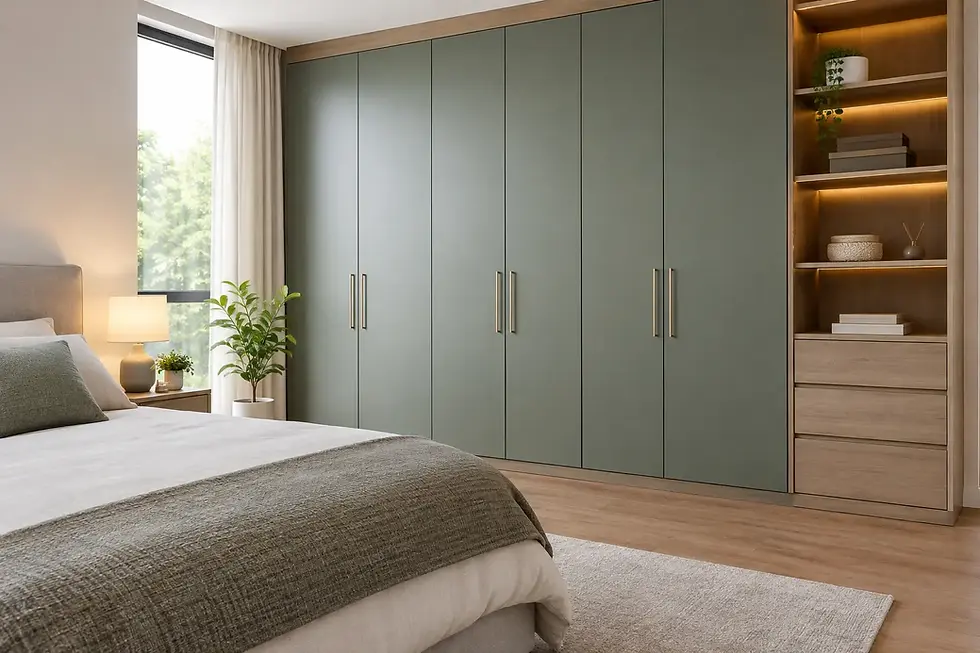
They are also a strong option in main bedrooms where visual calm matters. A fitted design can stretch wall to wall and floor to ceiling, reducing clutter and making the room feel more deliberate. In family homes, they help when storage needs change over time. Internal layouts can be designed around how you live now, while still allowing some flexibility for the future.
Even in fairly standard box rooms, a made to measure wardrobe can outperform a larger freestanding one simply because it uses every millimetre properly.
Choosing the right layout inside
This is the part people often rush, then regret. Door style gets the attention, but internal planning is what determines whether the wardrobe feels useful six months later.
Start with hanging space. Long hanging is essential for dresses, coats and longer items, but it takes up more height. Double hanging is efficient for shirts, skirts and folded trousers. Most wardrobes need a mix rather than one or the other.
Shelving is useful, but only when it is the right depth and spacing. Deep shelves can turn into hidden piles if they are not planned carefully. Drawers are ideal for smaller items, nightwear and accessories, especially when you want a tidier look. Shoe storage can be simple shelving, angled racks or a section built around the number of pairs you actually use most.
Overhead compartments are brilliant for less frequently used items such as suitcases, spare bedding or seasonal wear. The key is not to fill the whole wardrobe with hard-to-reach storage and then wonder why everyday use feels awkward.
A good designer will ask practical questions, because the answers shape the build.
Finishes, doors and the look of the room
A wardrobe should earn its place visually as well as practically. This does not mean it needs to dominate the room. Often the smartest choice is the opposite - a finish that sits comfortably with the walls, flooring and overall style of the bedroom.
Light finishes can help a smaller room feel more open. Woodgrain tones add warmth and can soften a modern layout. Mirrored doors are useful in compact bedrooms because they bounce light around and remove the need for a separate full-length mirror. Glass and high-gloss finishes can look sharp, but they are not for everyone. If fingerprints will irritate you, that is worth factoring in now rather than later.
Handles, frames and door profiles make a difference too. Some homeowners want a minimalist look with clean lines and little visual interruption. Others prefer a more classic style that feels closer to fitted furniture than contemporary storage. The right answer is the one that suits your home, not a showroom trend.
What affects the cost
There is no single price for made to measure wardrobes because the final figure depends on size, internal features, door choice, finish and installation complexity. A straightforward run across one wall will cost less than a design shaped around awkward angles, premium finishes and a heavily customised interior.
That said, it helps to think in terms of value rather than headline price alone. Flat-pack furniture can seem cheaper at first, but if it wastes space, wears poorly or needs replacing sooner, the savings are not always as clear as they look.
With a design-manufacture-install service, you are paying for more than materials. You are paying for measured planning, manufacturing to suit the room, and a fitted result that looks intentional once it is in place. That often leads to a better finish and fewer issues than trying to piece the project together from multiple suppliers and trades.
Why measuring and fitting matter so much
One of the biggest differences between a wardrobe that looks good in theory and one that works beautifully in practice is the quality of the survey and installation. Real rooms are rarely perfectly square. Floors can slope, walls can bow and ceilings can vary more than you might expect.
That is why accurate measuring matters. It affects not only whether the wardrobe fits, but whether the doors run smoothly, gaps are neat and the whole thing feels built in rather than squeezed in. Good installation finishes the job properly, dealing with those real-world quirks so the final result feels polished.
This is also where working with a specialist can be reassuring. A company that designs, manufactures and installs its own wardrobes has clearer control over the process, and that tends to show in the end result.
Questions worth asking before you commit
Before you go ahead, ask how the wardrobe will be tailored to your room rather than adapted from a standard unit. Ask what flexibility you have with the internal layout, what finishes are available, and whether the design can account for skirting boards, coving, sloped ceilings or uneven walls.
It is also worth asking about lead times, how installation is handled, and what the process looks like from first visit to final fit. For homeowners in Essex who want one team to manage the full job, that joined-up approach can make the experience far more straightforward.
The right wardrobe should not feel like a compromise dressed up as a luxury. It should solve a practical problem, suit the way you live and make the room feel better every time you walk into it. If you start there, the design decisions become much easier - and the finished result is far more likely to feel right for years to come.


Comments