
Fitted Wardrobe Designs That Work Harder
A wardrobe that almost fits is usually the reason a bedroom never feels quite finished. You get the wasted gap at the top, the dust trap down the side, doors that dominate the room, and storage that somehow still is not right. Good fitted wardrobe designs solve that by working with the room rather than fighting it.
That matters more than people often expect. A fitted wardrobe is not just a place to hang clothes. It changes how the room looks, how it flows, and how easy it is to keep tidy day to day. When it is designed properly, it gives you more usable storage and a cleaner overall finish, especially in bedrooms with awkward corners, chimney breasts, sloping ceilings or alcoves.
What good fitted wardrobe designs really do
The best designs start with the room itself. Every bedroom has constraints - ceiling height, door positions, window lines, sockets, skirting boards, even where you naturally walk when you come in. A freestanding wardrobe ignores most of that. A fitted one makes those details part of the plan.
That is why bespoke storage often feels calmer once installed. Instead of several separate pieces competing for space, the wardrobe becomes part of the room. It can sit wall to wall, floor to ceiling, or neatly around existing features. The result looks intentional rather than added later.
There is also a practical advantage. You are not paying for empty voids above units or dead space behind them. Every section can be designed around what you actually need to store - more hanging for dresses and shirts, deeper shelves for knitwear, drawers for smaller items, or a mix that suits two people sharing one run of wardrobes.
Choosing fitted wardrobe designs for your room shape
Room shape has a huge impact on what will work well. A large square bedroom gives you options, but many homes need something more considered.
Alcoves and chimney breasts
Alcoves are one of the clearest cases for fitted furniture. Off-the-shelf wardrobes rarely sit neatly in them, which leaves gaps and an uneven look. A fitted design can use both alcoves either side of a chimney breast and make the whole wall feel balanced. In some rooms, adding bridging units or open shelving across the centre can tie everything together without making the space feel heavy.
Sloping ceilings and loft rooms
Loft bedrooms are often full of wasted potential. The lower parts of the room are awkward for standard furniture, but they are ideal for made-to-measure wardrobes. The design needs a careful eye here. Full-height storage may only work on one wall, while lower runs with drawers and hanging sections can make use of the eaves. Done well, the room feels purposeful rather than compromised.
Narrow bedrooms
In tighter rooms, door style becomes just as important as internal storage. Hinged doors need clearance to open, which can be inconvenient if the bed sits close by. Sliding doors often make more sense because they keep the footprint compact. The trade-off is that you only access one section at a time, so the internal layout needs to be planned properly.
Door styles change the feel of the room
People often start with finishes and colours, but the doors shape the whole visual effect.
Sliding doors tend to suit modern bedrooms and smaller spaces. They create a clean frontage and can help a room feel less crowded simply because there is no swing space to factor in. Mirrored panels can make a compact bedroom feel brighter, though too much mirror can feel cold if the rest of the room already has lots of hard surfaces.
Hinged doors offer full access to each section and can feel more traditional or furniture-like, depending on the finish. They also allow for details such as shaker-style fronts, handles with more character, or mixed panel designs. The downside is practical rather than aesthetic - you need enough room for them to open comfortably.
Neither option is automatically better. It depends on how much space you have, the style of the property, and how you use the room every day.
The inside matters just as much as the outside
A wardrobe can look impressive from across the room and still be frustrating to use. The internal design is where fitted storage earns its keep.
Long hanging is useful, but too much of it wastes vertical space for most households. Double hanging sections can store shirts, trousers, blouses and shorter items far more efficiently. Drawers built into the wardrobe can reduce the need for separate bedroom furniture. Adjustable shelves give flexibility, but fixed sections often feel sturdier and more deliberate when the storage plan is clear from the start.
This is where a proper design conversation matters. One person may want more shoe space and full-length hanging. Another may need room for folded knitwear, bags, spare bedding or even a tucked-away dressing area. Shared wardrobes work best when each zone is planned around the individual using it, rather than splitting the space into two equal halves and hoping for the best.
Finishes, colours and the built-in look
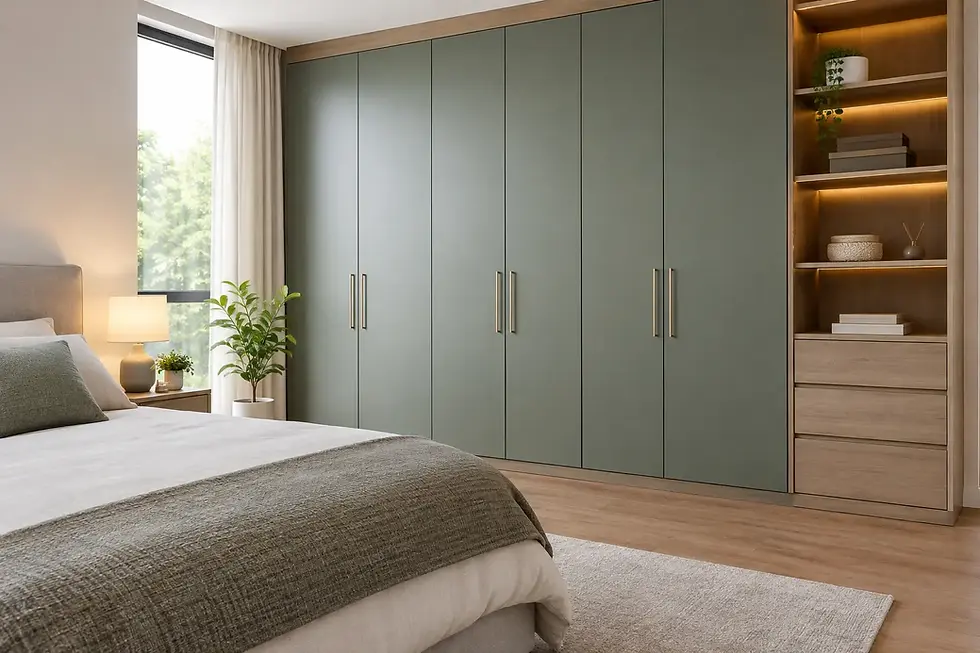
A fitted wardrobe should suit the room, not overpower it. In smaller bedrooms, lighter finishes often help keep things open and airy. Soft whites, warm neutrals and subtle wood tones tend to age well and work with changing paint colours or flooring.
Darker finishes can look striking, particularly in larger rooms with good natural light. They bring depth and can make a wardrobe feel more architectural. But they do absorb light, so they need balancing with the rest of the space.
Handle choice, panel style and surface texture all play their part. A plain slab door gives a sharper, more contemporary feel. Framed doors can bring softness and suit period homes or more classic interiors. Glass and mirror inserts add light, though they are usually best used with restraint. The most successful rooms are rarely the ones where every feature shouts for attention.
Fitted wardrobe designs should solve real problems
This is where bespoke work stands apart from flat-pack furniture. The goal is not simply to install a wardrobe. It is to fix the things that are not working in the room now.
That might mean reclaiming the dead space above a standard unit. It might mean building around a boxed-in pipe or using an awkward corner that has never been useful. In family homes, it can mean designing enough storage that clothes, toys, laundry and spare bedding all have a proper place instead of drifting into other rooms.
For homeowners improving a main bedroom, the benefit is often visual as much as practical. Once storage is integrated, the room tends to feel more settled. There is less clutter, fewer mismatched pieces, and a clearer sense that the bedroom has been designed rather than assembled over time.
Why design-manufacture-install makes a difference
A fitted wardrobe is one of those jobs where the handover between designer, supplier and installer can create problems if nobody owns the whole process. Measurements can be interpreted differently. Materials can be chosen without thinking about installation constraints. Small details can slip.
That is why a design-manufacture-install approach usually gives a better result. The wardrobe is planned as one complete project, with the design shaped by what will actually be built and fitted in the room. It means cleaner decision-making, clearer accountability and fewer surprises on installation day.
For homeowners in Essex, working with a specialist such as Slideaglide often makes that process feel more manageable. You are not trying to coordinate separate trades or second-guess whether an off-the-shelf solution will work. The job is designed around your space from the outset.
Getting the balance right
The smartest fitted wardrobe designs are not always the most elaborate. More drawers, more mirrors, more compartments and more features do not automatically make a better wardrobe. Sometimes they make it feel busier and harder to use.
The right design is usually the one that fits your room cleanly, reflects your style, and makes everyday storage easier without demanding attention. It should feel built for the house and for the people living in it.
If you are planning a bedroom update, start by looking at what the room is failing to do now. The best wardrobe is not just attractive on paper. It gives wasted space a purpose, makes the room easier to live in, and leaves you wondering why you put up with the old layout for so long.


Comments