
How to Design Wardrobes for Small Bedrooms
A small bedroom usually tells on a wardrobe before anything else. Doors clash with the bed, dead space builds up in corners, and the top shelf becomes a place for things you forget you own. That is why knowing how to design wardrobes for small bedrooms matters so much - the right design does not just store more, it makes the whole room feel calmer and easier to use.
Start with the room, not the wardrobe
The biggest mistake in a small bedroom is choosing a wardrobe shape first and trying to force it into the space later. In tighter rooms, every decision needs to come from the layout. Where does the door open? How much space is there beside the bed? Is there an alcove, a chimney breast, a sloping ceiling, or a low wall that makes standard furniture awkward?
A well-designed fitted wardrobe works with those details rather than fighting them. If the room has an uneven wall or a shallow recess, that can become useful storage instead of wasted space. If the bed leaves a narrow walkway, the wardrobe needs to respect that. Good design starts by measuring how the room actually behaves day to day, not just how it looks on a floor plan.
This is where bespoke fitted furniture usually has the advantage over freestanding pieces. A standard unit may leave gaps at the side, above, or behind it. In a small bedroom, those lost inches add up quickly.
How to design wardrobes for small bedrooms without making them feel cramped
Storage capacity matters, but so does visual weight. A wardrobe can fit physically and still make a room feel smaller than it needs to. The trick is to balance usable storage with a lighter overall look.
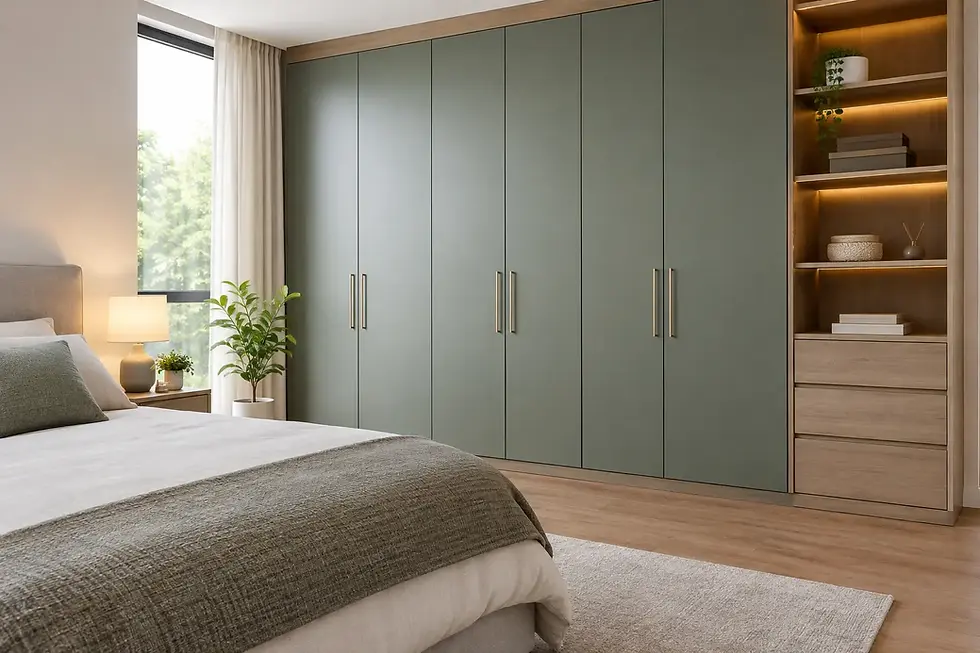
Floor-to-ceiling designs are often the smartest option in compact bedrooms. They use the full height of the room, reduce dust-trapping gaps on top, and create a built-in finish that looks cleaner than separate pieces. That said, full-height storage needs careful internal planning. If everything important ends up too high to reach, you gain space on paper but not in practice.
Door style also changes how spacious a room feels. Sliding doors are often the better choice where clearance is tight because they do not swing out into the room. In narrow bedrooms or where the wardrobe sits close to the bed, that can make daily use much easier. Hinged doors still have their place, especially if you want full access to the interior at once, but they need enough opening room to work properly.
The finish matters too. Lighter colours, mirrored panels, and simple door designs can help a wardrobe sit more quietly in the room. Darker finishes can look striking, but in a very small bedroom they need to be handled carefully. It depends on the amount of natural light, the wall colour, and whether you want the wardrobe to blend in or stand out.
Get the internal layout right
A wardrobe that looks tidy outside but wastes space inside is only doing half the job. Small bedrooms need wardrobes that are planned around real routines. That means thinking about what you actually store, how often you use it, and what tends to create clutter.
For most people, a mix of hanging space, shelving, and drawers works better than relying too heavily on one type of storage. Long hanging sections are useful, but they can also eat up height quickly. In many bedrooms, a double hanging arrangement for shirts, blouses, jackets, and folded trousers gives you far more usable storage than one tall hanging bay.
Shelves are helpful, but too many deep shelves become black holes where items get stacked and forgotten. Drawers can be a better answer for smaller clothing, accessories, or everyday essentials because they keep things visible and easier to organise. Upper shelves are ideal for less-used items such as spare bedding, suitcases, or seasonal wear.
There is no single perfect layout. A couple sharing a wardrobe may need a very different arrangement from a guest room or a child’s bedroom. That is why tailored design matters. The best wardrobe is not the one with the most compartments - it is the one that matches how the household lives.
Make awkward areas earn their keep
Small bedrooms often come with quirks. Alcoves, bulkheads, sloping ceilings, boxed-in pipework, and uneven corners are common, especially in older homes. These areas can seem like a nuisance, but they are often where fitted wardrobes deliver the biggest gain.
An alcove beside a chimney breast can become a tall hanging section or shelving tower. A lower area beneath a slope may suit drawers or cupboard storage. A shallow recess can be ideal for shelving, accessories, or folded items. Instead of trying to hide these shapes with standard furniture, it usually makes more sense to design around them and turn them into purposeful storage.
That approach tends to make the room look more considered as well. When wardrobes follow the lines of the space, the whole bedroom feels less crowded and more settled.
Think beyond storage alone
If a bedroom is short on space, the wardrobe often needs to do more than one job. It may need to include a dressing area, accommodate a television recess, frame the bed, or create a cleaner finish around awkward architecture. This is where custom design can make a real difference.
For example, a run of wardrobes around the bed can turn one wall into a complete storage feature, freeing up other parts of the room. Integrated bedside shelving or bridging units can reduce the need for extra furniture. In some rooms, that is a better use of space than trying to fit separate wardrobes, chests, and tables into every available gap.
The trade-off is that more built-in detail needs careful planning. Over-designing a small room can make it feel busy. Clean lines usually work best, with enough features to solve practical problems without overloading the space.
Choose details that help the room feel bigger
Small bedrooms benefit from simple, disciplined choices. That does not mean plain or characterless. It means every detail should earn its place.
Mirrored wardrobe doors can bounce light around and make a room feel more open. They are particularly useful where there is limited wall space for a separate mirror. Soft neutral finishes can help a fitted wardrobe blend into the background, while handleless or low-profile handles keep the look neat.
Inside the wardrobe, lighting can also improve usability. Internal lights are not always essential, but in deeper or darker wardrobes they make a noticeable difference. If you are storing plenty in a compact footprint, being able to see everything properly matters.
A final point that often gets missed is access. It is not enough for a wardrobe to fit the room exactly. You still need to move around comfortably, open drawers fully, and reach the storage without contorting yourself every morning. Practical ease is part of good design.
Why fitted wardrobes often work best in compact bedrooms
When space is limited, wasted edges are expensive. Gaps above a wardrobe, unusable corners, and off-the-shelf dimensions that do not quite suit the room all reduce what the furniture can do. Fitted wardrobes avoid much of that by being made for the exact width, height, and depth available.
That usually means better use of the room and a cleaner result visually. There is also the benefit of having the design, manufacture, and installation handled as one process. It keeps the finish more consistent and avoids the common problem of making separate pieces work together after the fact.
For homeowners in Essex looking to improve a smaller bedroom, that joined-up approach often saves more frustration than people expect. A wardrobe is one of the biggest items in the room. Getting it right changes how the whole space functions.
A practical way to plan your design
If you are deciding how to design wardrobes for small bedrooms, begin with three questions. What has to be stored? What parts of the room are currently underused? And what makes the space feel awkward now?
Those answers usually reveal the right direction. If floor space is tight, sliding doors may be the answer. If the ceiling height is being wasted, go full height. If alcoves are sitting empty, build into them. If clutter comes from folded clothes and accessories, improve the drawer layout rather than just adding more hanging rails.
At Slideaglide, we see the best results when wardrobe design is treated as part of the room, not as furniture added at the end. That is the difference between squeezing storage in and properly shaping the space around how you live.
A small bedroom does not need more stuff in it. It needs better use of what is already there, and a wardrobe that makes the room feel easier from the moment you walk in.


Comments