
Sliding Doors vs Hinged Wardrobes
A wardrobe can look perfect on paper and still be the wrong choice once you live with it. That is usually what makes sliding doors vs hinged wardrobes such a useful question. It is not just about appearance. It is about how your bedroom works day to day, how much clearance you have, and how you want the finished room to feel.
For some homes, sliding doors are the obvious answer. In others, hinged wardrobes are easier to use and more flexible in the long run. The right option depends on your room shape, furniture layout, storage habits and style preferences. When a wardrobe is being made to fit your space properly, those details matter.
Sliding doors vs hinged wardrobes: the space question
If space is tight, sliding doors often have the advantage. Because the doors glide sideways rather than opening out into the room, they do not need a clearance area in front. That can make a real difference in smaller bedrooms, loft rooms or layouts where the bed sits quite close to the wardrobe.
This is often the deciding factor in compact homes where every inch counts. A fitted sliding wardrobe can sit neatly along one wall and still allow easy movement through the room. If you are working around a narrow walkway or trying to avoid doors knocking into bedside tables, this style keeps things simpler.
Hinged wardrobes need room for the doors to swing open. In a larger bedroom, that is rarely a problem. In a tighter one, it can become an irritation very quickly. You may find yourself adjusting furniture placement around the wardrobe instead of the other way round.
That said, space saving is not always the whole story. A room may be large enough to handle hinged doors comfortably, and in that case the benefits of full access can start to outweigh the extra opening space they need.
Access matters more than most people expect
This is where hinged wardrobes tend to win people over. When you open hinged doors, you can see the full width of that section at once. That makes it easier to view clothing, reach top shelves, and organise the inside without working around one fixed sliding panel.
With sliding wardrobes, one section is always covered by at least one door. That does not make them impractical, far from it, but it does change how you use the wardrobe. If two people are getting ready at the same time, or if you like full visibility of everything inside, a hinged layout may feel more convenient.
For some households, that difference is minor. For others, it is something they notice every day. If your wardrobe is mainly for hanging clothes and keeping the room tidy, sliding doors may suit you perfectly. If you want quick, complete access to shelves, drawers and compartments, hinged can feel more straightforward.
Style and the feel of the room
Sliding wardrobes usually create a cleaner, more contemporary look. Large door panels give a smooth, uncluttered finish, and they work especially well in modern bedrooms where you want the furniture to feel calm and built in. Mirrored sliding doors can also help reflect light and make a room appear bigger.
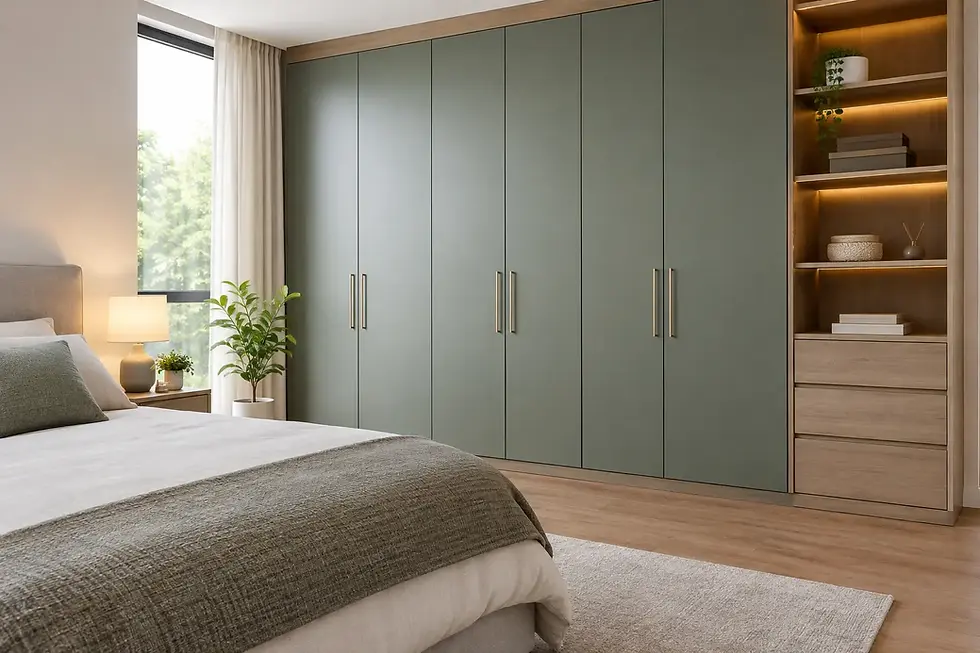
Hinged wardrobes offer more traditional detail and a bit more visual character. They can feel softer and more furniture-like, particularly in period homes or bedrooms where you want classic styling rather than a flat, minimalist front. They also give you more opportunity to play with panel designs, handles and finishes.
Neither style is automatically better. It depends on the room you are trying to create. A sleek new extension bedroom might suit sliding doors beautifully. A master bedroom with a warmer, more classic scheme might sit better with hinged fronts.
Because fitted wardrobes are made around the room rather than chosen off the shelf, the finish can be tailored either way. The key is choosing a door style that matches both the look of the space and the way you use it.
Sliding doors vs hinged wardrobes for awkward layouts
Not every bedroom has straight walls and generous proportions. Alcoves, chimney breasts, sloping ceilings and boxed-in corners all affect what will work best.
Sliding wardrobes tend to work particularly well across long, uninterrupted runs. If you have a clear wall and want a streamlined storage solution, they can make excellent use of the available width. They are also a strong option in rooms where opening doors would clash with the bed or restrict movement.
Hinged wardrobes can be more adaptable in broken-up spaces. In alcoves or around unusual ceiling lines, separate hinged sections can sometimes give better access and a more practical internal layout. If one part of the wardrobe is shallower, taller or shaped differently from the rest, hinged doors can accommodate that variation more naturally.
This is one reason bespoke design matters. The best answer is not based on a showroom photo. It comes from the actual room, the measurements, and how the storage needs to perform once installed.
What about maintenance and everyday wear?
Both styles can last very well when they are properly made and fitted, but they do behave differently over time.
Sliding wardrobes rely on a track system, so good manufacture and installation are crucial. If the doors are poorly aligned or the running gear is basic, problems show up sooner. A well-made sliding wardrobe should glide smoothly and feel solid, but it needs precision.
Hinged wardrobes use hinges, which are simple and familiar. They are generally easy to adjust if needed, and many homeowners like that straightforward mechanism. There is less moving hardware across the full width of the wardrobe, which can make hinged designs feel reassuringly uncomplicated.
Daily habits matter here too. If children are using the wardrobe, or if doors are likely to be opened and closed frequently throughout the day, build quality becomes more important than the door style alone. A fitted solution should be made for real life, not just for first impressions.
Cost, value and what you are really paying for
People often ask whether sliding or hinged wardrobes are cheaper. The honest answer is that it depends on the size, finish and internal specification.
Sliding doors can cost more in some cases because of the door system, larger panels and track hardware. Hinged wardrobes may be simpler mechanically, but if you have lots of doors, detailed finishes or added features, costs can rise there too.
The better way to think about it is value. A wardrobe should solve storage problems, improve the room and hold up well over time. The cheapest route is not always the most cost-effective if it wastes space or does not suit the room properly.
That is why design-manufacture-install matters. When the wardrobe is planned as one joined-up project, you are not trying to make standard units fit an awkward bedroom. You are creating storage around the room you actually have.
Which one is right for your home?
If your bedroom is tight on floor space, if you want a sleek look, or if mirrored panels would help open up the room, sliding doors are often the stronger choice. They are particularly good in smaller bedrooms where clearance is limited and a calm, modern finish is the goal.
If you have the room for doors to open comfortably and you want full access to every section, hinged wardrobes may suit you better. They are especially useful when organisation is a priority and when the layout includes alcoves or other tricky features.
For many homeowners, the decision comes down to this: do you need to save space in front of the wardrobe, or do you want unrestricted access to the inside? Once you answer that honestly, the choice usually becomes clearer.
A good fitted wardrobe should do more than fill a wall. It should make the bedroom easier to use, easier to keep tidy and more pleasing to walk into every day. If you are weighing up sliding doors vs hinged wardrobes, the smartest starting point is not which one looks best in a brochure. It is which one will work best in your room, with your routine, for years to come.
The right wardrobe does not shout for attention. It simply fits the space, fits your life, and makes the whole room feel better organised from the moment it is installed.


Comments