
Bespoke Storage Versus Flat Pack: Which Fits?
A wardrobe that leaves a 20cm gap above it, wastes an alcove or blocks a drawer is not really solving a storage problem. When weighing up bespoke storage versus flat pack, the question is less about buying furniture and more about how well your home needs to work for you.
Flat-pack units can be a sensible choice for some rooms and some budgets. But where space is limited, ceilings are uneven or a room needs a more considered finish, made-to-measure storage offers a very different result. The best option depends on the room, the way you live and what you expect from the finished space.
Bespoke Storage Versus Flat Pack: The Real Difference
Flat-pack furniture is designed to suit as many homes as possible. It comes in standard widths, heights and finishes, ready for collection or delivery and assembly. That makes it accessible, familiar and often less expensive at the point of purchase.
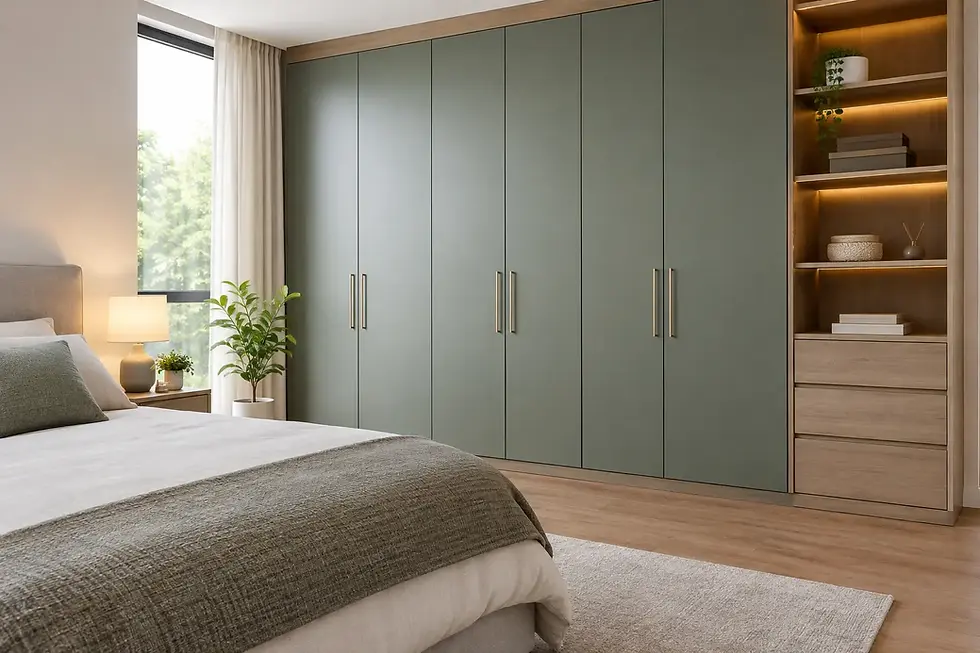
Bespoke fitted storage is designed around one particular room. Measurements are taken from the actual space, including skirting boards, sloping ceilings, chimney breasts, alcoves and any awkward corners. The internal layout, door style, colour and finish are chosen with the customer, then the furniture is manufactured and installed to fit.
The difference is most obvious once everything is in place. A freestanding wardrobe may sit against a wall. A fitted wardrobe becomes part of the room, running neatly from wall to wall or floor to ceiling where required.
Where Flat-Pack Furniture Makes Sense
There is a place for flat-pack storage. If you are furnishing a first home, need a quick solution for a spare room or expect to move soon, standard furniture can offer useful storage without a large upfront commitment. It also works well in generous, square rooms where there is no need to make every centimetre count.
For some homeowners, flexibility is the key benefit. A standalone chest of drawers can move to another room, and a standard wardrobe can come with you when you relocate. There is a wide choice of ready-made styles too, which can be helpful when you need something quickly.
The limitations usually appear when the room is less straightforward. Standard units do not adjust to an uneven wall, a low ceiling or a narrow recess. You may need to compromise on size, accept unused gaps or combine several pieces in the hope they look cohesive. Assembly and fitting also become your responsibility, unless you pay separately for help.
Why Made-to-Measure Storage Changes a Room
Bespoke storage starts with the available space rather than a product catalogue. That is particularly valuable in bedrooms, where wardrobes are often the largest item of furniture and where poor planning can make the whole room feel cramped.
A fitted design can use the full height of a room for less frequently used items, while keeping everyday clothing, shoes and accessories easy to reach. It can wrap around a chimney breast, sit beneath a sloping roof or turn an underused alcove into purposeful storage. Instead of working around furniture that almost fits, the furniture is made to work around your home.
The visual benefit matters too. Matching doors, carefully chosen handles and a finish that complements the room can make storage feel calm rather than cluttered. This does not mean every wardrobe has to be plain or formal. Sliding doors, mirrored panels, contemporary colours and traditional finishes can all be tailored to suit the property and your taste.
At Slideaglide, the design-manufacture-install approach keeps that process connected. The people planning the storage understand how it will be made and fitted, helping to avoid the handovers and guesswork that can arise when several separate trades are involved.
Better use of awkward spaces
Many homes across Essex have rooms that do not follow standard dimensions. A boxed-in pipe, an angled ceiling or a shallow alcove can make off-the-shelf furniture look out of place. These areas are exactly where bespoke storage earns its keep.
A narrow recess may be ideal for shelves and drawers. The space above a bed can become useful overhead storage. A loft room can gain wardrobes that follow the roofline without making the room feel boxed in. Each solution should be designed with access in mind, not simply built into every available inch.
Storage designed around daily routines
The inside of a wardrobe is just as important as the doors. One household may need long hanging for dresses and coats; another may need double hanging rails, deep drawers for children’s clothes or adjustable shelves for folded laundry. A standard interior asks you to adapt your belongings to it. A bespoke interior can be planned around what you actually own.
Before choosing a layout, take stock of the items that cause the most frustration. Are shoes piling up at the bottom of the wardrobe? Do bulky winter duvets take over valuable hanging space? Is there never a sensible home for bags, belts or ironing equipment? These details are useful at the design stage and can make a noticeable difference every day.
Cost: Upfront Price and Long-Term Value
The upfront cost is often the first comparison people make, and flat-pack furniture will usually cost less initially. It is produced in volume, sold in standard sizes and often requires some degree of self-assembly. Bespoke furniture involves a survey, individual design work, manufacturing and professional installation, so it is a more considered investment.
However, price alone does not show the full picture. A lower-cost wardrobe that leaves dead space, needs replacing after a few years or never quite suits the room may not represent the best value. Equally, a bespoke solution is not automatically the right choice if the space is temporary or the budget needs to cover several other home improvements.
It helps to compare like for like. Include delivery, assembly, fitting, any alterations needed to make standard furniture work, and the storage capacity you are actually gaining. Then consider how long you expect to live with the result. For a main bedroom or a room with difficult dimensions, a fitted solution often delivers greater day-to-day value because it resolves several problems at once.
Installation and Finish Matter More Than You Think
Flat-pack furniture can look smart when it is assembled carefully on a level floor with enough room around it. Yet small details can affect the result: exposed side panels, visible gaps, doors that need adjustment and dust collecting above the units. In a bedroom where every surface is visible, these details can make furniture feel temporary.
Professionally fitted storage is measured, manufactured and installed as one project. Panels can be scribed to walls where needed, doors aligned and finishing pieces used to create a built-in appearance. The aim is not to make the room look crowded with cabinetry. It is to make the storage feel as though it belongs there.
That level of finish is especially worthwhile when you are improving a principal bedroom, creating a calmer family home or preparing a property for sale. Buyers may not choose the same décor, but well-planned storage is an easy practical benefit to appreciate.
Questions to Ask Before You Decide
Start with the room rather than the furniture. Measure it, but also look at how it is used at different times of day. Check door swings, window positions, radiators, plug sockets and the route needed to carry furniture into the room. A wardrobe that technically fits can still make a room awkward to live in.
Think honestly about permanence. If you want a quick, movable solution, flat-pack may be the right answer. If you are settling into a home and want storage that uses difficult space properly, bespoke is likely to be the stronger choice.
Finally, consider the finish you want to see every morning. Storage is one of the few parts of a bedroom you use constantly, often without noticing it. When it has been planned around the room and the people using it, getting dressed, putting laundry away and keeping the space tidy simply becomes easier.
A good wardrobe should not ask you to work around its limitations. Choose the option that gives your belongings a proper place and gives your room the breathing space it deserves.


Comments