
Wardrobe Lighting That Makes Storage Work Harder
A beautifully fitted wardrobe can still feel frustrating at 6.30am if the back of every shelf disappears into shadow. Wardrobe lighting changes that daily experience. It helps you see colours properly, find the right shoes without pulling everything out, and make better use of the storage you have paid to create.
For a bespoke wardrobe, lighting should never be an afterthought. The internal layout, door style, depth of shelving and position of the power supply all affect what will work best. A good plan brings practical light exactly where it is needed, while keeping the finish clean and unobtrusive.
Why wardrobe lighting earns its place
The obvious benefit is visibility, but the difference goes further. Proper illumination makes a wardrobe easier to keep organised because each area has a clear purpose. Hanging clothes, folded knitwear, handbags and drawers are all visible at a glance, so belongings are less likely to migrate into a chair or onto the floor.
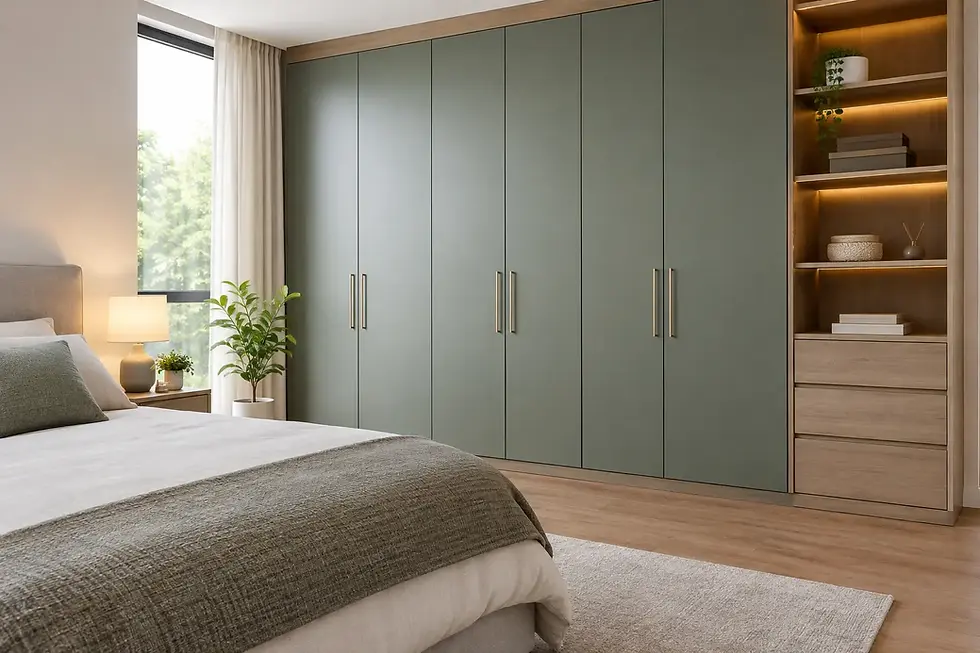
It can also improve the look of the room. A soft, well-positioned light gives a fitted wardrobe depth and makes the interior feel considered rather than purely functional. This is particularly effective with darker finishes, deep shelving or wardrobes built into alcoves where natural light does not reach.
There is a practical safety benefit too. Opening a wardrobe in the early morning or late evening should not mean switching on the main bedroom light and disturbing someone else. Sensor-controlled lights provide enough illumination to choose what you need, then turn themselves off again.
That does not mean every wardrobe needs lighting in every compartment. In a compact wardrobe with shallow shelves and good daylight, a simple light along the hanging rail may be all that is required. The aim is useful light, not a showroom effect that adds cost without improving how you live.
Choosing wardrobe lighting for your layout
The best type of lighting depends on how the wardrobe is organised. This is why it is valuable to consider it while the wardrobe is being designed, rather than trying to fit a solution around a finished interior.
LED strip lighting for shelves and vertical panels
LED strip lighting is a popular choice for fitted wardrobes because it is slim, discreet and flexible. It can be recessed beneath shelves to light the contents below, or fitted vertically near the front edge of an interior panel to spread light across hanging clothes.
Shelf lighting works especially well in tall units, where the upper sections can otherwise cast a shadow over the lower shelves. A continuous profile produces an even wash of light rather than bright spots. It is also a strong option for display shelving, open wardrobe sections and accessory storage.
The detail that matters is placement. A strip fitted too far back may highlight the rear panel but leave the front of the shelf dark. Positioned towards the front, with the light angled inwards, it is far more useful and less likely to shine directly into your eyes.
Illuminated hanging rails
An illuminated rail is one of the neatest solutions for everyday clothing storage. The light is built into or closely integrated with the rail, directing illumination down through shirts, jackets and dresses. It keeps the wardrobe interior uncluttered and is particularly helpful in a full-height section with sliding doors.
This option suits people who want a clean result without visible fittings on shelves or side panels. It is not always the answer for every section, however. If your wardrobe relies heavily on folded storage, drawers or shoe shelves, rail lighting alone will leave those areas less well lit.
Drawer and cabinet lighting
Drawers can become a hiding place for smaller items, even in a carefully organised bedroom. Lights that activate when a drawer opens are useful for jewellery, ties, accessories, underwear and make-up storage. They are subtle, but they make a noticeable difference when you are getting ready in low light.
For wider drawers, choose a fitting that distributes light across the full width. A single small light may be enough for a narrow compartment, but it can leave the corners of a large drawer in shade. As with the wardrobe itself, the internal layout should lead the decision.
Sensor controls make the difference
The most practical wardrobe lights work automatically. Door sensors and motion sensors mean the light comes on as the wardrobe opens and goes off when it is closed. There is no searching for a switch, and no risk of leaving a light on all day.
Door-activated lighting is usually the most predictable choice for hinged doors. For sliding wardrobes, sensors can be positioned to respond when a door moves or when someone reaches into the wardrobe. The right approach depends on the door system and whether separate sections can be opened independently.
Touch controls can suit open dressing areas or wardrobes with a dedicated dressing table section. They offer more control over brightness, but they are less convenient when your hands are full of laundry or you are in a hurry. Automatic lighting generally wins for a busy family bedroom.
A dimming option is worth discussing if the wardrobe is used at night. Bright task lighting is useful for checking colours and finding specific items, while a softer setting is more comfortable before bed or during early starts. It is a small feature that can make a room feel more considered.
Getting colour temperature right
Light colour changes how clothes, finishes and skin tones appear. This is measured in Kelvin, and it is one of the decisions that can make wardrobe lighting feel either welcoming or clinical.
Warm white lighting, around 2700K to 3000K, has a softer, more relaxed look that works well in bedrooms with warm wood grains, cream finishes and traditional décor. Neutral white, around 4000K, is brighter and clearer for choosing outfits and seeing true colours. It often suits contemporary interiors, white or grey wardrobes, and households where the wardrobe is used as a proper dressing space.
There is no universal right answer. If the bedroom lighting is warm and gentle, very cool wardrobe lighting can feel out of place when the doors are open. If accurate colour matching is the priority, neutral white may be the better compromise. Looking at samples alongside your chosen door finish helps avoid a surprise once everything is installed.
Plan the electrics early
A fitted wardrobe can hide cables, drivers and fittings neatly, but only if they are included from the start. During the design stage, consider where the power will come from, where components can be accessed if needed, and how lighting will work around cornices, end panels and sliding door tracks.
Mains-powered lighting is a dependable long-term choice and is often best for a fully integrated installation. It should be planned and connected appropriately, particularly where a new electrical point is needed. Rechargeable, battery-operated lights can be useful for a small retrofit or a rented property, but they need charging or battery changes and rarely give the same polished result in a bespoke wardrobe.
It is also sensible to choose quality LED fittings rather than treating them as a minor extra. Good LEDs use little energy and generate far less heat than older lighting types, but the driver, profile and installation quality still matter. Cheap fittings can produce uneven light, fail early or create visible glare along a glossy surface.
Design for light, not just around it
Lighting works best when it supports the way you use your wardrobe. A long-hanging section may need an illuminated rail; a bank of shelves benefits from under-shelf lighting; a dressing area could call for a brighter, more colour-accurate option. The answer should follow your belongings and routines, not a standard package.
Door choice matters as well. Mirrored doors reflect light back into the room, while darker or matt finishes absorb it. Sliding doors can leave only part of the interior open at a time, so lighting may need to be zoned carefully. Hinged doors offer a wider view, but can create their own shadows if lights are poorly positioned.
At Slideaglide, lighting can be considered alongside every part of a made-to-measure wardrobe, from the first layout discussion to the final fitted finish. That gives you the chance to decide what will genuinely improve the room before the cabinet is manufactured.
The best wardrobe lighting is rarely the feature guests notice first. It is the quiet detail that makes an ordinary Monday morning easier, helps your storage stay tidy, and lets a fitted wardrobe do its job properly for years to come.


Comments