
9 Best Bedroom Storage Upgrades for More Space
A bedroom can look tidy at first glance and still feel impossible to live with. The usual signs are a wardrobe that is full but poorly arranged, drawers that cannot close, and clothes living on a chair because there is nowhere practical to put them. The best bedroom storage upgrades do more than add another unit. They make every part of the room work harder, while keeping the finished look calm and considered.
For homeowners, the right choice depends on the room itself. A large master bedroom may need better internal wardrobe organisation; a box room may need storage designed around a single wall; an awkward loft bedroom may need furniture that follows the roofline. Starting with how you use the room leads to a far better result than simply buying more furniture.
Best bedroom storage upgrades that earn their space
1. A fitted wardrobe built to the full height
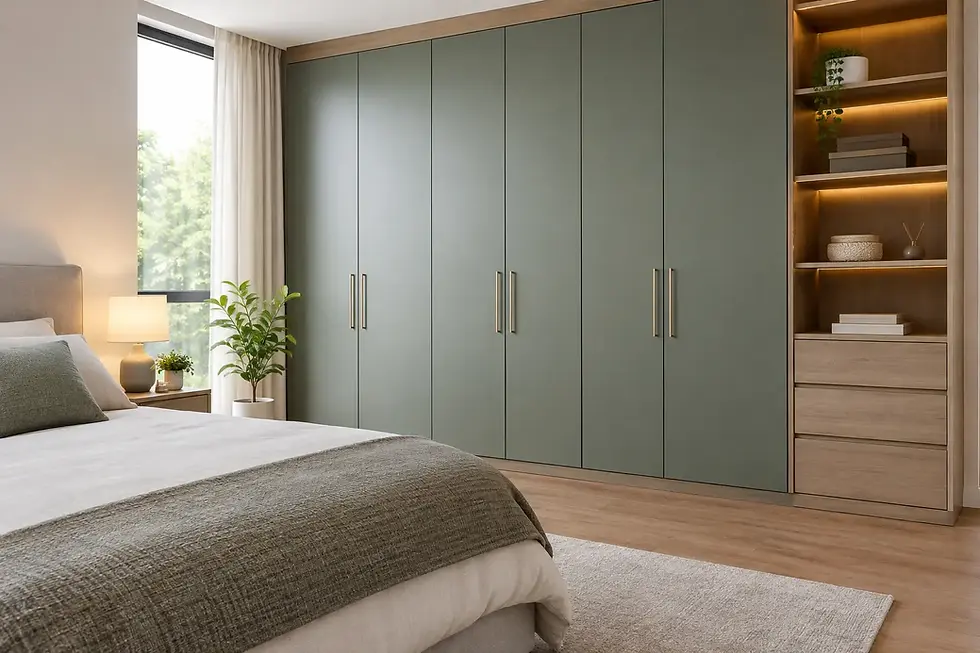
A freestanding wardrobe almost always leaves unused space above it. That high gap soon becomes a dusty shelf for bags, boxes and things that are hard to retrieve. A fitted wardrobe that runs from wall to wall and floor to ceiling turns that lost area into useful storage.
The upper section is ideal for seasonal bedding, suitcases and occasionwear, while everyday clothes remain within easy reach below. In rooms with high ceilings, this can make a remarkable difference without taking up any more floor area.
There is a visual benefit too. A wardrobe designed around the room looks intentional rather than added on. Choosing door finishes that work with the wall colour can make a substantial run of storage feel quieter, which is particularly helpful in smaller bedrooms.
2. Sliding doors where floor space is tight
Hinged wardrobe doors need clearance to open. In a narrow bedroom, that can mean moving the bed, avoiding a bedside table or squeezing past an open door every morning. Sliding doors remove that problem because they stay within the wardrobe footprint.
They are especially useful opposite a bed or along a long wall in a compact room. Mirrored panels can also help reflect light and give the room a more open feel, although a full mirror is not right for every scheme. If you prefer a softer, less reflective finish, plain coloured or wood-effect panels can create the same clean, fitted appearance.
The trade-off is access: only part of the wardrobe is open at one time. Good internal planning matters here, so the sections you use most are positioned conveniently.
3. A wardrobe interior designed around your clothes
The inside of a wardrobe is where many storage problems begin. One long hanging rail might suit a collection of dresses and coats, but it wastes space if most of your clothes are shirts, trousers and folded knitwear. Better storage starts with an honest look at what you own and how you get dressed.
Double hanging rails work well for shorter garments. Deep drawers keep underwear, sportswear and accessories organised. Adjustable shelves make room for changing needs, while pull-out shoe racks prevent footwear from becoming a pile at the bottom of the wardrobe. A dedicated section for long items is worth including, even if it is smaller than the main hanging area.
This is where bespoke storage has a clear advantage. Instead of adapting your belongings to a standard layout, the layout is designed around your belongings. Before any design is finalised, count your longer garments, measure larger items such as luggage, and think about what currently ends up on the floor.
4. Make use of alcoves and unused corners
Alcoves are often treated as difficult spaces, particularly where a chimney breast interrupts a bedroom wall. Yet they can be some of the most valuable storage areas in the room. A made-to-measure wardrobe, shelves or drawer unit can use the full depth and height of an alcove without leaving awkward gaps at either side.
Corners deserve the same attention. A poorly placed freestanding unit can make a room feel crowded, whereas fitted storage can be planned to follow a corner neatly. This is particularly effective in period properties and homes with irregular walls, where standard furniture rarely sits flush.
Keep the visual weight in mind. Open shelving can make a small alcove feel busy if it is filled with mixed items. Closed cabinetry is usually the better choice for everyday bedroom storage, with open shelves reserved for a few books, photographs or carefully chosen decorative pieces.
5. Add drawers that are easy to live with
Drawers are one of the most useful bedroom upgrades because they make contents visible and accessible. They are excellent for folded clothes, nightwear, jewellery, hair accessories and smaller items that get lost on a shelf. A run of drawers built into a wardrobe can remove the need for a separate chest, freeing up valuable floor space.
Shallow internal drawers are useful for accessories, while deeper drawers suit jumpers and bedding. Dividers are a small detail that make a practical difference, particularly in shared wardrobes. The aim is not to create a showroom-perfect system that needs constant attention. It is to give each everyday item a sensible home.
6. Choose a bed with useful storage, not just extra bulk
The area beneath a bed is often underused, but not every under-bed solution is equally convenient. Loose plastic boxes are inexpensive and can be useful for items you only need a few times a year. For everyday storage, however, they often become difficult to pull out and easy to forget.
An ottoman bed offers a large concealed compartment and works well for spare duvets, pillows and seasonal clothing. Drawer beds are another option, but check there is enough space beside the bed for the drawers to open fully. In a narrow room, an ottoman mechanism is usually more practical.
Consider how often you need access. Bedding and holiday luggage suit under-bed storage; clothes you reach for every week generally belong in a wardrobe or drawer at a more comfortable height.
7. Turn the space around the bed into storage
The wall behind or beside the bed can often do more than hold a headboard. Integrated bedside units, tall narrow cabinets or a fitted bridge unit above the bed can add storage without introducing several separate pieces of furniture.
This approach works best when the design stays balanced. Overhead units should not feel imposing, and bedside storage needs enough clear surface for the essentials: a lamp, book, glasses or a cup of tea. Built-in lighting can be useful here, reducing the need for bulky table lamps and keeping bedside surfaces clearer.
For a family home, this can also be a smart way to give a smaller bedroom a more grown-up, organised layout without compromising the walking space.
8. Create a proper dressing area
Getting ready often creates clutter because the bedroom lacks a designated place for it. A fitted dressing table, a drawer unit with a mirror above, or a compact wardrobe section with pull-out shelving can contain cosmetics, hair tools and jewellery that would otherwise spread across every available surface.
Think carefully about lighting and power points at the planning stage. A beautiful dressing area is less helpful if there is nowhere safe to plug in a hairdryer or if the mirror is in the darkest corner of the room. Small practical details are what make a fitted solution enjoyable every day.
9. Plan storage for the room you will need next year
The strongest bedroom upgrades are flexible enough to accommodate change. Children grow, wardrobes evolve, and a spare room may later become a nursery, office or guest bedroom. Adjustable shelves, reconfigurable hanging sections and a mixture of drawers and cupboards help storage stay useful for longer.
It is also worth leaving a little breathing room. Filling every shelf from day one makes organisation harder, not easier. A well-designed wardrobe should give you capacity for what you own now, plus room for laundry, new purchases and the occasional item that needs a temporary home.
How to choose the right upgrade for your bedroom
Start by measuring the room, but do not stop at wall dimensions. Note radiator positions, window openings, plug sockets, skirting boards, ceiling slopes and door swing. These details determine whether a solution will feel integrated or become an obstacle.
Then identify the real pressure point. If clothes are overflowing, prioritise hanging and drawer space. If the room feels cramped, look first at full-height fitted wardrobes and sliding doors. If clutter gathers around the bed, bedside and under-bed storage may deliver the quickest improvement. It is rarely about adding storage everywhere. It is about putting it where it removes friction from your routine.
For homes with awkward layouts, a design-manufacture-install service can be particularly worthwhile. Slideaglide works with homeowners across Essex to shape fitted wardrobe storage around the room, rather than expecting the room to accommodate standard furniture. That means the finish, internal layout and dimensions can all be considered together.
A bedroom should be the easiest room in the house to put back in order. Choose storage that fits the way you live, leave space for change, and every morning can begin with a little less searching and a lot more room to breathe.


Comments