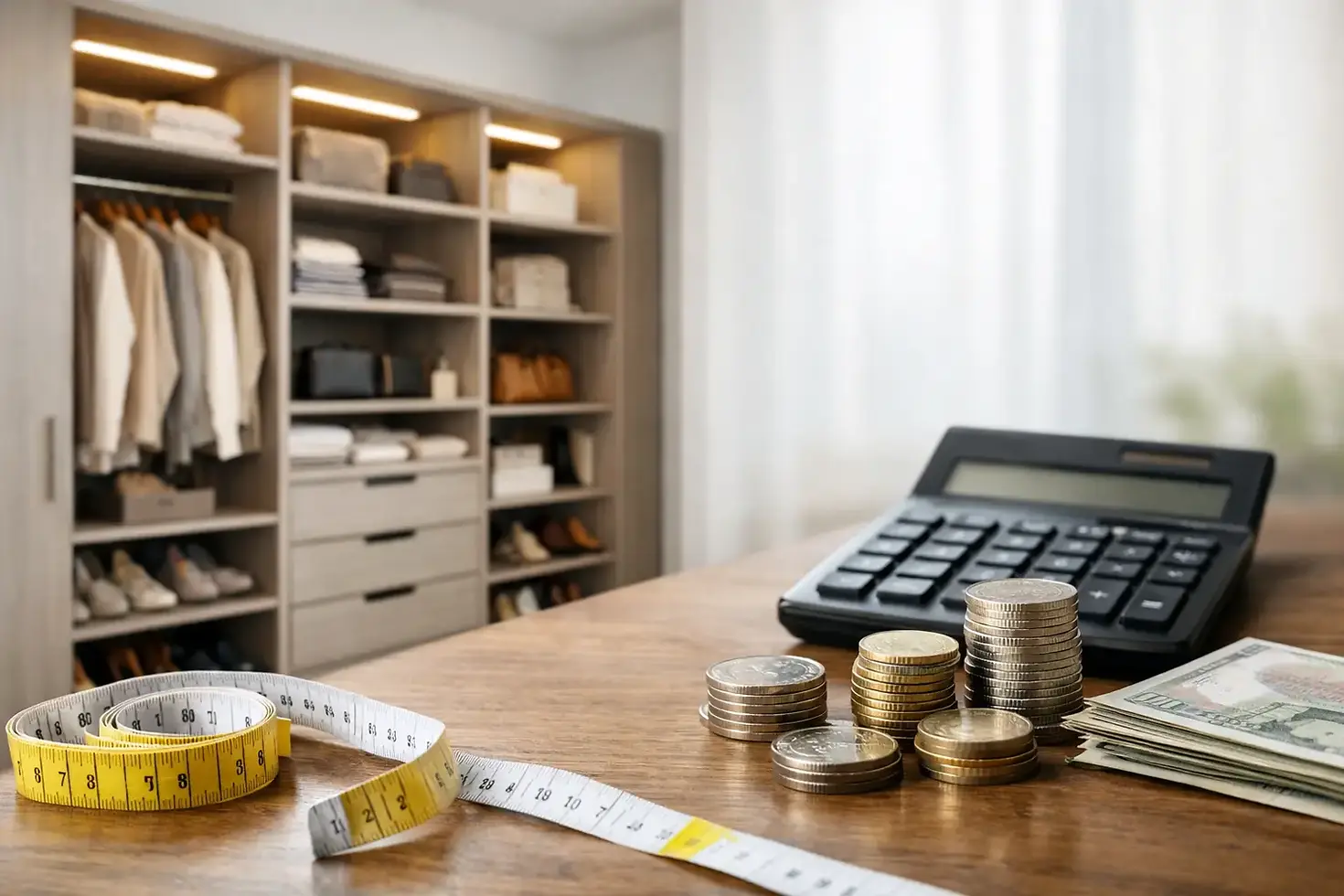
What Affects Fitted Wardrobe Cost?
A fitted wardrobe can look simple from the outside, but the price is shaped by dozens of decisions behind the doors. If you are wondering what affects fitted wardrobe cost, the short answer is this: size matters, but so do the room shape, the finish, the internal layout and the level of custom work needed to make everything fit properly.
That is why two wardrobes that appear similar at first glance can end up with very different prices. One may be going into a straightforward square wall with standard hanging space. Another may need to work around a chimney breast, a sloping ceiling, uneven walls and a request for drawers, shelves, mirrored doors and integrated lighting. Both are fitted wardrobes, but they are not the same job.
What affects fitted wardrobe cost most?
The biggest influence is usually the amount of wardrobe being made and installed. Wider wardrobes need more materials. Taller wardrobes need more board, more door surface and often more planning around access and installation. Deeper wardrobes can also change the internal storage options and the amount of material used.
But size alone does not tell the whole story. A large wardrobe in a clean, simple room can sometimes be more straightforward than a smaller wardrobe fitted into an awkward loft bedroom. Bespoke furniture is priced around the real work involved, not just the final dimensions.
Room shape and awkward spaces
One of the main reasons people choose fitted wardrobes is to make use of space that freestanding furniture wastes. Alcoves, eaves, corners and recesses can all become useful storage, but they also add design and manufacturing complexity.
A wardrobe built wall to wall in a standard bedroom is usually more predictable to design and fit. A wardrobe that has to follow the line of a sloping ceiling, step around boxing, or sit neatly into an older property with uneven walls takes more detailed measuring and more tailored production.
This is where bespoke work earns its keep. The wardrobe is not being chosen off a shelf. It is being designed around your room, which is exactly what creates the clean built-in finish people want. It can also mean a higher cost than a simpler installation.
Alcoves, loft rooms and chimney breasts
These features often make fitted wardrobes the best option, but they nearly always affect price. A pair of alcove wardrobes either side of a chimney breast, for example, may need different internal layouts depending on depth and access. Loft wardrobes under eaves can be excellent for storage, but angled cuts, reduced access and made-to-measure doors all add time and detail.
None of that is a reason to avoid them. It simply means the quote reflects the actual shape of the room rather than a standard unit dropped into place.
Door style and finish
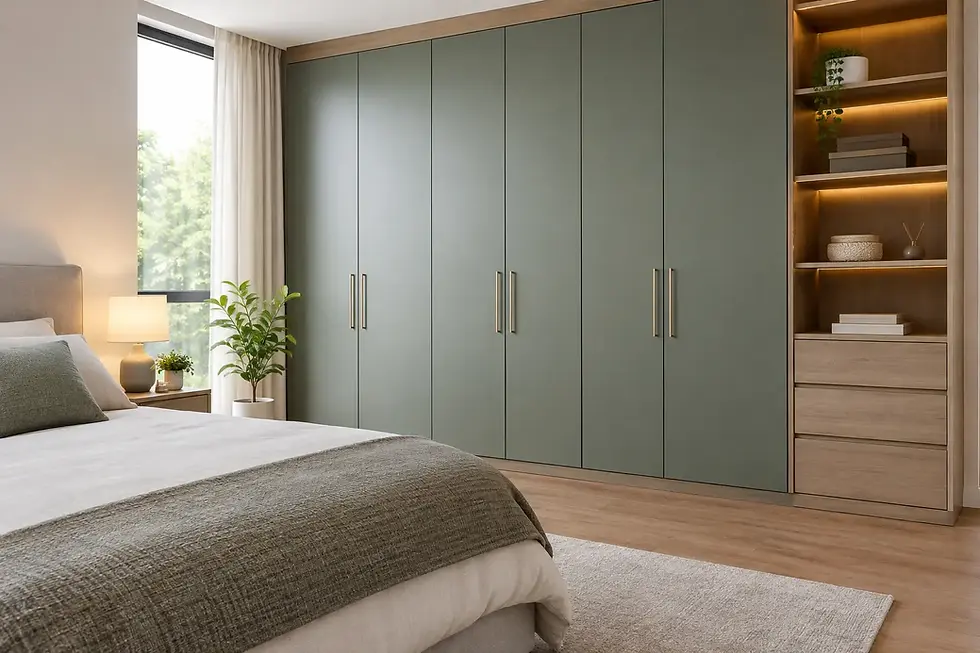
Doors have a big visual impact, and they can make a noticeable difference to cost too. Plain slab doors are generally a different proposition from shaker-style doors, panel detailing, mirrored finishes or glass combinations. Sliding doors and hinged doors also come with different hardware, fitting requirements and design considerations.
Some homeowners prefer the clean, minimal look of sliding doors, especially where space is tight. Others want hinged doors for full access to the interior. There is no universal best choice here. It depends on the room, the look you want and how you use the wardrobe day to day.
The finish matters just as much. A simple matt board finish will be priced differently from wood-effect textures, mirrored panels or more premium surface options. If you want the wardrobe to blend closely with the rest of the bedroom furniture or overall décor, that level of specification can affect the final figure.
Internal storage design
This is one area where people often underestimate the difference in cost. A wardrobe with one hanging rail and a top shelf is quite different from a wardrobe designed to organise clothes, shoes, bags, bedding and accessories in a very specific way.
Shelves, double hanging sections, internal drawers, trouser racks, pull-out baskets and display compartments all change the amount of material, components and labour involved. Drawers in particular tend to add more than people expect because they need runners, fronts, internal boxes and careful fitting.
A more detailed interior is often worth it. Good fitted storage is not only about getting more into the room. It is about making the space easier to use every day. Still, if budget is a concern, the interior layout is often one of the clearest areas where you can prioritise what matters most and simplify what does not.
Custom storage versus keeping it simple
If you know exactly how you want to use the wardrobe, a tailored internal layout can be the best value in the long run. It helps avoid dead space and creates storage that actually suits your routine. On the other hand, if you are trying to keep costs under control, a simpler mix of hanging space and shelving can still work very well.
The key is to be honest about what you need. There is no point paying for specialist storage features that will barely be used.
Materials and build quality
Not all fitted wardrobes are built in the same way. Board thickness, edging quality, carcass construction, door mechanisms and hardware all influence durability as well as cost.
This is often where comparisons become tricky. A cheaper quote may look attractive until you realise it includes thinner materials, less substantial runners or a more limited finish. A higher quote may reflect better construction, a more refined fit and a wardrobe that will stand up to daily use far better.
For most homeowners, value is not the same as the lowest number. It is the balance between price, appearance and how well the wardrobe performs over time.
Installation complexity
Installation is not just a final step. It is a meaningful part of the cost. Access to the property, ceiling height, floor levels and how square the room is can all affect the fitting process.
In some bedrooms, installation is relatively straightforward. In others, the fitter may need to scribe panels carefully to uneven walls, adjust for out-of-level floors or work in tighter spaces with limited manoeuvring room. These details are what help a fitted wardrobe look properly built in rather than just pushed against the wall.
A design-manufacture-install approach can help here because the wardrobe is being planned with production and fitting in mind from the start. That joined-up process usually leads to a better result and fewer surprises once work begins.
Extras that change the price
There are a few optional features that can lift both the finish and the cost. Lighting is one. Integrated LED lighting can make a wardrobe feel far more polished, especially in darker rooms, but it involves additional planning and components. Soft-close mechanisms, premium handles and more decorative interior touches also influence the price.
These extras are rarely essential, but they can make the wardrobe feel more complete. Whether they are worth including comes down to priorities. If the aim is maximum storage at a sensible budget, they may be lower on the list. If the wardrobe is part of a full bedroom upgrade, they may feel worth the spend.
Why quotes can vary so much
When homeowners compare prices, it is easy to assume one company is simply more expensive than another. Sometimes that is true. Often, though, the quotes are based on different assumptions.
One quote may include design, manufacture and installation as a complete service. Another may price only the furniture itself, with fewer options, simpler internals or less finishing work. Some companies specialise in genuinely bespoke work. Others adapt standard-size systems to fit as best they can.
That is why a like-for-like comparison matters. Look beyond the headline figure and ask what is actually included. The cheapest wardrobe is not always the one that gives you the best use of space, the best finish or the least hassle.
Getting the best value from your budget
If you are planning a fitted wardrobe, the smartest approach is to decide early where your budget matters most. If appearance is the priority, you may choose a more premium door style and a simpler interior. If function comes first, you might invest in better storage features and keep the external finish more understated.
It also helps to think about the room as a whole. A fitted wardrobe should solve a storage problem and improve how the bedroom works, not just fill a wall. That is often where bespoke design proves its value. A well-planned wardrobe can make a smaller room feel calmer, tidier and easier to live with.
For homeowners in Essex looking at made-to-measure storage, the most useful quote is not the fastest one. It is the one based on a proper understanding of your room, your needs and the finish you want to achieve.
The right fitted wardrobe is rarely about choosing the cheapest route. It is about paying for the parts that genuinely improve the result, and leaving out the ones that do not matter to you.


Comments